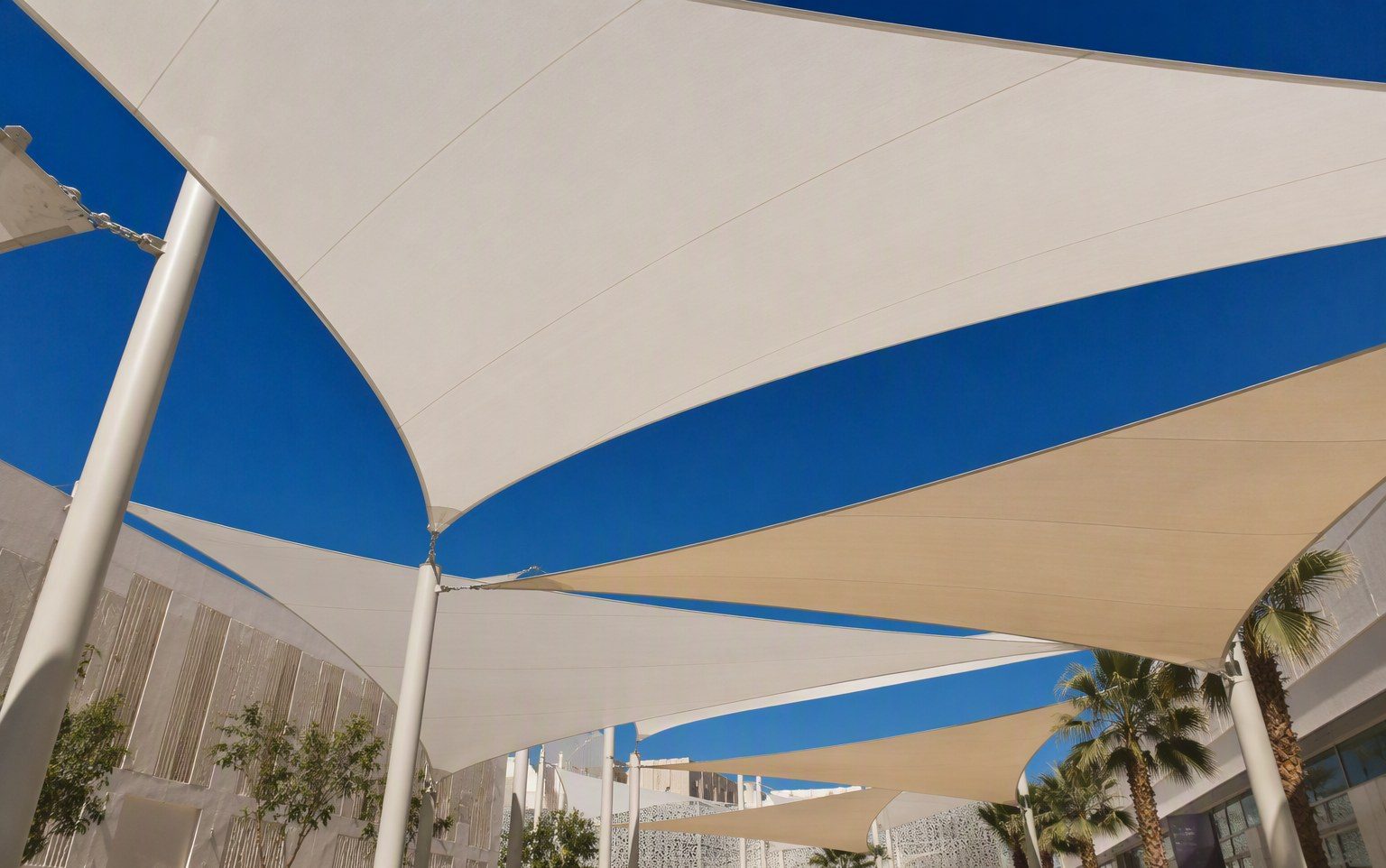
Important Things to Know About Sun Shade Sails
Materials, UV ratings, anchors and tensioning — the essential knowledge for buying a sun shade sail that survives the UAE climate.
Materials and UV Ratings
The fabric is everything. Quality sails use knitted HDPE with UV stabilisers throughout the thread — look for a certified UV block of 90% or higher and a written warranty; premium grades reach 98% with 10-year cover. Waterproof PVC variants exist for rain protection, trading breathability for a sealed surface. Unbranded budget cloth fades and weakens within a couple of Gulf summers.
Expect a little settling in the first weeks. New fabric relaxes slightly under initial tension, so a good installer returns — or shows you how — to take up the slack at the turnbuckles after the first month. That single adjustment is what keeps the sail drum-tight and silent for years, and it is a hallmark of suppliers who plan for the long term rather than the handover photo.
Anchors Are Engineering, Not Accessories
A tensioned sail pulls hard on every corner — forces that multiply in shamal winds. Building fixings must be engineered for the wall construction; dedicated posts need proper concrete footings. Stainless steel corner rings, marine-grade turnbuckles and reinforced perimeter webbing are the minimum specification for hardware that will hold for a decade.
Installation Essentials
Build in slope — height variation between corners lets the sail tension correctly and shed dust and rain. Tension evenly and re-check after the first weeks as the fabric settles. And plan the layout around the sun you want to block: overhead for midday, western for afternoons.
Al Hamra Industries custom-patterns and installs sun shade sails across the UAE. Call +971 6 531 3822 for a free survey and design.
Ready to shade your space?
Request a free site survey and itemised quotation — our engineers will recommend the right structure for your site and budget.