About Tensile Fabric Shade Structures: Definition and Applications
The basics of membrane architecture: what a tensile fabric structure actually is, how it carries load, and where the technology is applied in the UAE.
A Working Definition
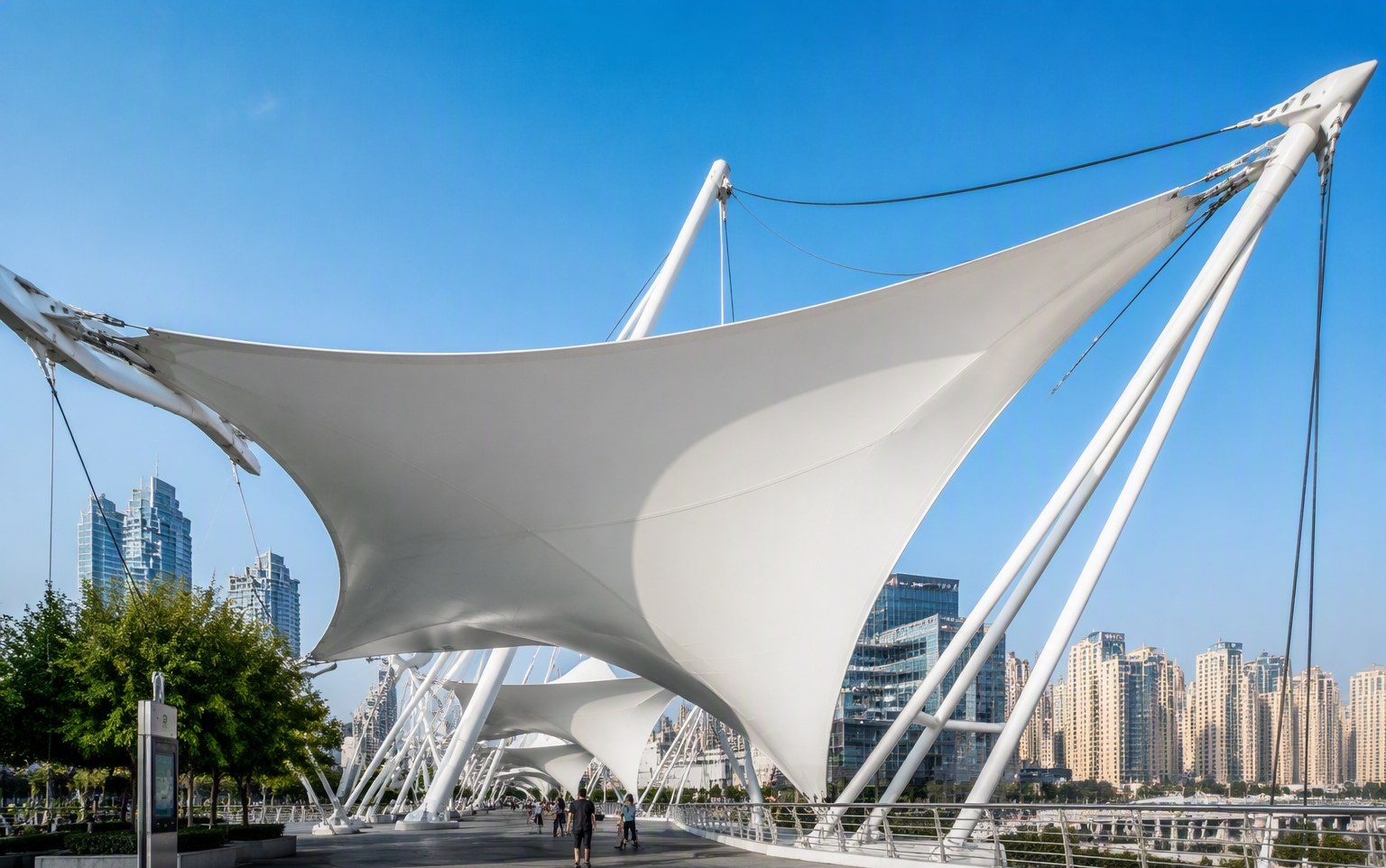
A tensile fabric shade structure is a roof that carries load through tension in a membrane rather than through beams and rigid decking. A technical fabric — typically PVC-coated polyester or PTFE-coated glass — is stretched into a double-curved surface between masts, arches and cables. The curvature pre-stresses the membrane so it behaves as a stiff, stable roof despite weighing a fraction of conventional construction.
The materials behind the membrane are worth knowing. PVC-coated polyester offers excellent performance with design lives of 15 to 20 years, while PTFE-coated glass fabric exceeds 30 years and is effectively inert to UV and pollution. Both are welded into panels in specialist facilities — patterning and seam quality are where craftsmanship lives — then tensioned on site to the engineered shape.
Why the Form Matters
The curves are structural, not decorative. Opposing curvatures — the classic saddle and cone geometries — let the membrane resist both downward and uplift loads, shedding wind and water by shape alone. This is why tensile roofs can span 30–40 metres with minimal supports and why they survive Gulf wind conditions that would damage lighter fixed canopies.
Applications Across the UAE
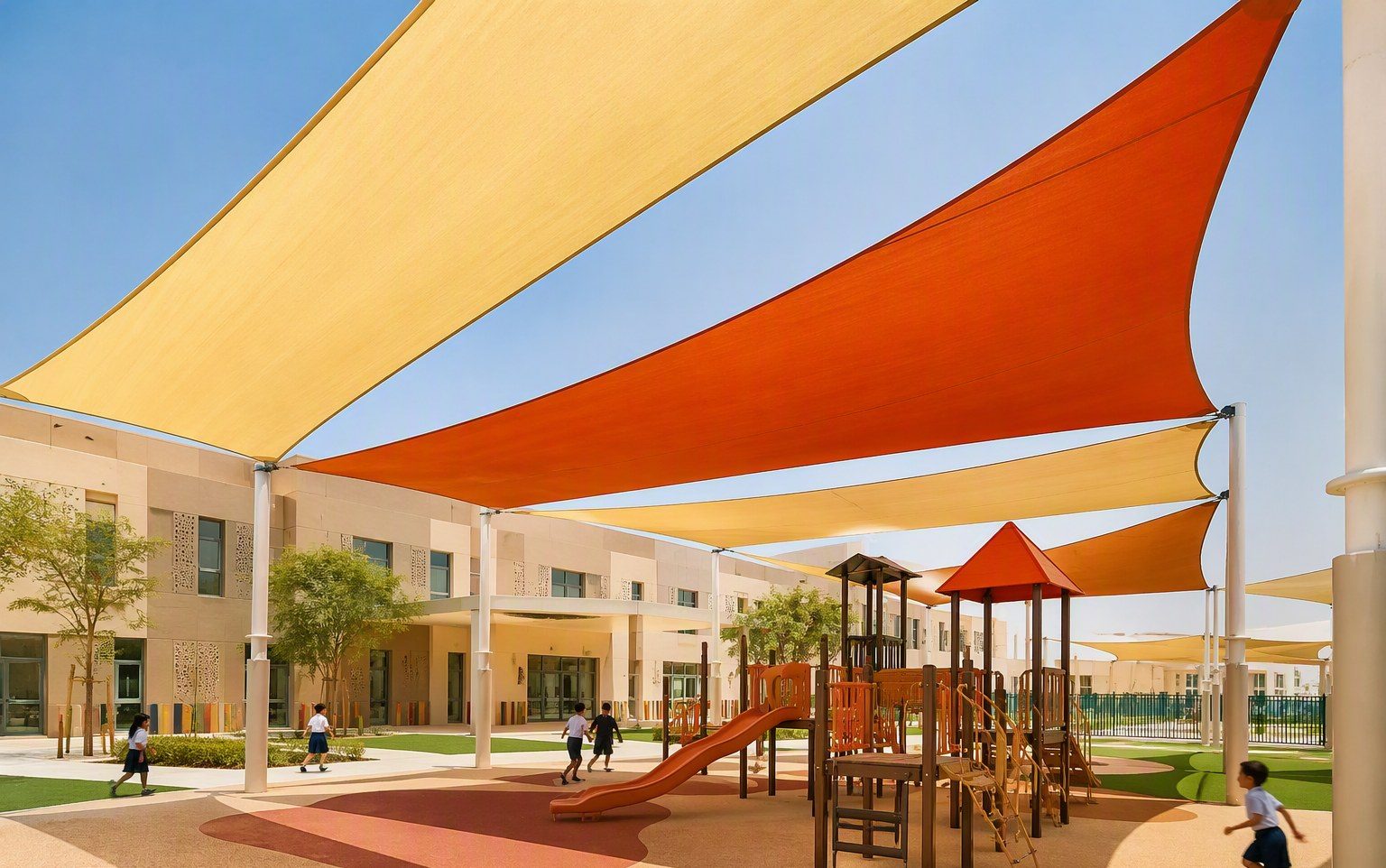
The technology shades car parks and school playgrounds, hotel entrances and pool decks, walkways and waterfront promenades, amphitheatres and stadium concourses — anywhere large areas need elegant, column-free, long-lived cover with soft filtered daylight.
Al Hamra Industries designs and builds tensile fabric structures in-house, from form-finding to installation. Call +971 6 531 3822 to discuss an application.
Ready to shade your space?
Request a free site survey and itemised quotation — our engineers will recommend the right structure for your site and budget.